From One Life to the Next Life
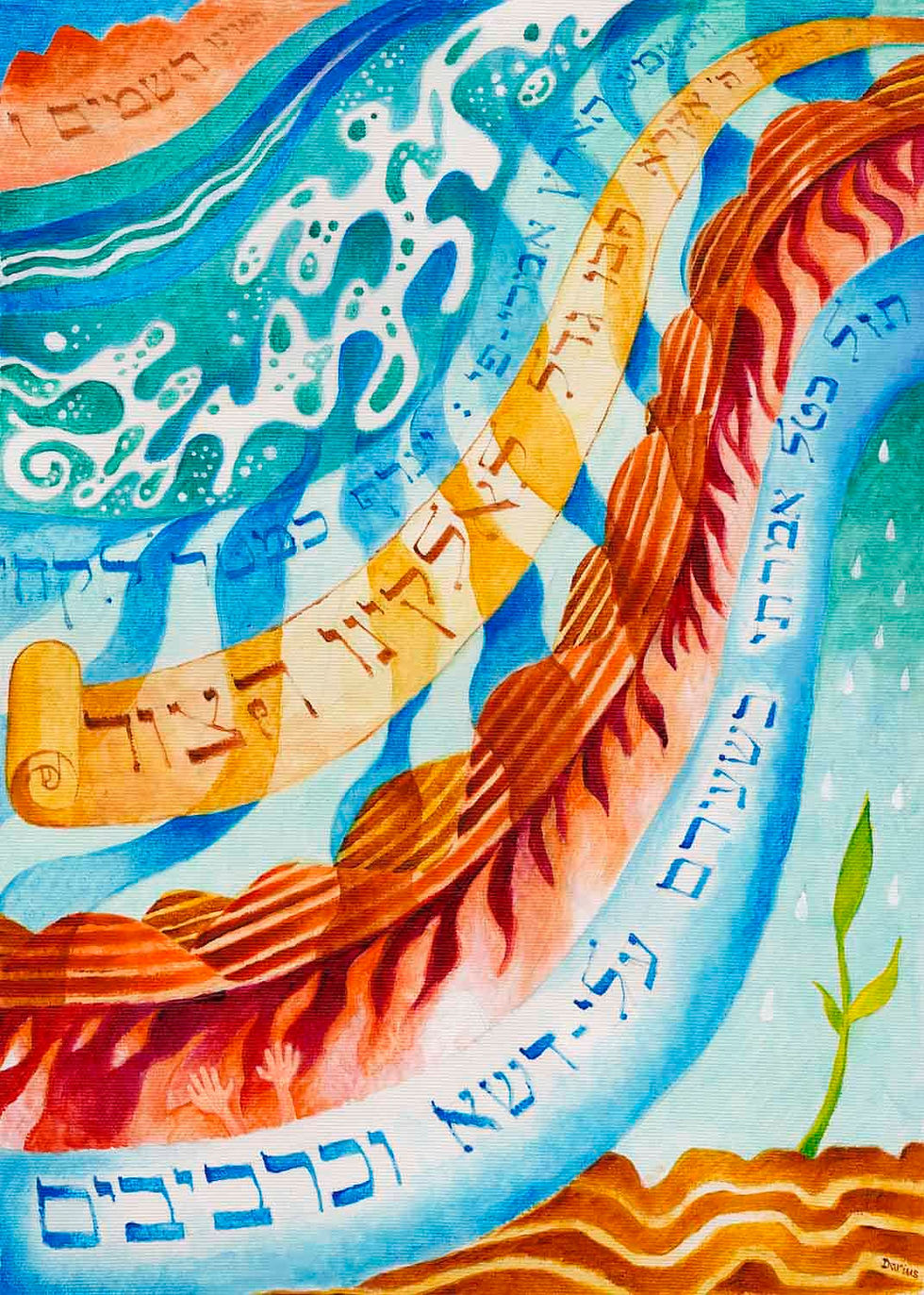
Parashat Haazinu is Moshe’s final song. He knows that he is about to leave this world, and yet the message he leaves the Jewish people is not one of despair. It is a message of hope: Don’t forget G-d, stay connected to G-d. Remember who you are. Choose the path of life.
One of the powerful lines in this week’s parsha is:
“I put to death and I give life.”
Life and death are both part of the larger journey of the soul.
And perhaps this is one of the reasons Haazinu speaks so beautifully to us as we approach Yom Kippur.
Yom Kippur is a day of cleansing and purification. It is considered a mikvah in time. It is a day when we are given the opportunity to be washed clean and return to our essence.
For one day, we step away from many of the physical experiences that normally define our lives. We don't eat or drink. We don’t bathe or use lotions on our body. We wear white. We spend much of the day in shul, focused on G-d and on the deepest questions of our own lives.
We have the opportunity, on this holiest of days, to experience ourselves not as a body, but as a Neshama, a soul.
We remind ourselves that we are a soul with a body not a body with a soul.
And our soul is constantly connected to G-d. It is G-d who continually breathes life into us and sustains us all the time.
The less we focus on the needs and pleasures of the body, the more space we create to experience the soul.
Yom Kippur becomes, in a sense, our own little Holy of Holies. It is a sacred space in time in which we step away from the ordinary and focus on coming closer to G-d.
In Parashat Nitzavim, Moshe tells us:
“I have set before you life and death... therefore choose life.”
We are given free will. We can choose the direction of our lives. We can choose what we focus on, how we behave, what kind of people we become, and how deeply we want to live in relationship with G-d.
And Yom Kippur gives us the opportunity to stop and ask:
What path am I on? Who am I becoming? What do I want to choose for the year ahead?
Teshuvah means to return. To return back toward G-d. To return back toward our soul. To return back to the beginning when we were filled with unlimited potential.
Haazinu's words about death and life (in that order) hint to there being life after death
Jewish tradition teaches us that death is not the end of the journey of the soul. The body returns to the earth, while the soul continues on its journey into the spiritual realms from where it came.
The soul and body are temporarily separated from each other because ultimately, we understand there will be Techiyat HaMeitim, the resurrection of the dead. At the End of Days there will be a reconstitution of the purified soul with its purified body, resulting in a renewed creation that will live forever in an intimate relationship with G-d.
So, death, then, is not an ending. It is a transition to more life.
Ultimately, the Jewish story is a story of life.
Moshe's final song is sung on the threshold of his own death, yet his message is to choose life.
Yom Kippur asks us to step away from the physical world for a day and reconnect with the soul that G-d placed within us.
It reminds us that beneath everything we do, beneath our successes and failures, beneath the mistakes we have made and the things we wish we could change, there is a soul that remains connected to G-d.
And that connection is never lost.
Perhaps this is the deepest message we can take from Haazinu into Yom Kippur:
Remember who you are. Return to your soul and to G-d. Choose life.
We have been given the extraordinary gift of free will, invited to live this life with purpose, and ultimately part of a journey that continues beyond this world.
From life, through death, and ultimately back to life.
May we enter Yom Kippur knowing that G-d is close. May we be blessed to choose life, embrace our souls, and step into the year ahead with renewed connection, purpose, and hope.
Much love


Comments